
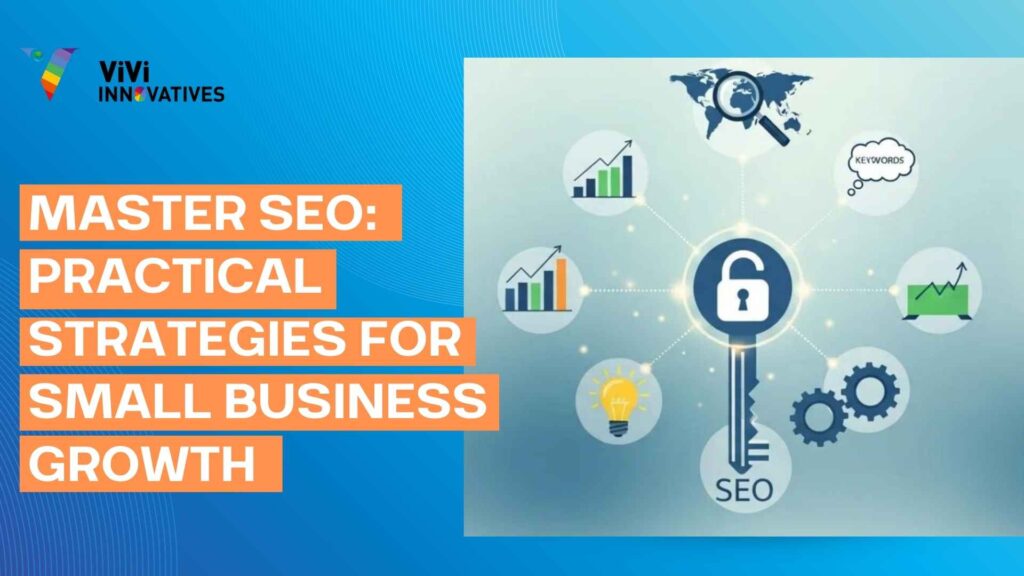
Online, small businesses must cut through a lot of noise to be found. Effective SEO drives steady organic traffic and raises your visibility where customers are searching. This article walks through focused, actionable SEO tactics for small businesses—keyword research, on-page and technical SEO, content marketing, link building, local SEO, ongoing optimization, and analytics—so you can strengthen your presence and attract more customers.
Key Takeaways
- Effective SEO increases visibility and drives organic traffic for small businesses.
- Keyword research identifies terms potential customers use, enhancing content relevance and reach.
- On-page SEO optimizes titles, meta descriptions, and content for user engagement and search engines.
- Technical SEO ensures a smooth user experience with fast speeds and mobile-friendly design.
- Content marketing builds authority and attracts audiences with diverse, valuable materials.
- Link building from reputable sites boosts credibility and domain authority.
- Local SEO enhances visibility in local searches through optimized Google Business Profiles.
- Continuous optimization involves monitoring performance and adapting to trends and changes.
- Analytics guide SEO decisions, focusing efforts on impactful strategies and improvements.
Keyword Research
Keyword research is the backbone of any SEO plan. It means discovering the words and phrases potential customers use when looking for your products or services, then shaping your content around that intent. Using the right keywords helps you reach the right people and improves the chances that visits turn into customers. Tools like Google Keyword Planner and Semrush make it easier to find high-potential terms that can move the needle for your site.
New technologies—especially AI—are reshaping how we do keyword research and optimize content, opening up faster, more personalized approaches to finding and targeting search intent.
AI in SEO: Enhancing Keyword Research & Content Optimization
AI is changing the way we approach SEO, introducing smarter workflows and new ethical questions. Modern AI tools use machine learning and advanced algorithms to speed up keyword discovery, fine-tune content for intent, and spot emerging trends. They also enable more tailored content that better matches individual user preferences, which can increase traffic and conversions when used responsibly.
Optimizing SEO with AI: Achieving Success Through Responsible Innovation, S Paul, 2024
On-Page SEO
On-page SEO is about making each page clear, useful, and easy for search engines and people to understand. Focus on title tags, meta descriptions, headers, and content quality. Use target keywords naturally, structure content for readers, and solve the user’s problem. Pages that engage visitors—keeping them reading and exploring—signal value to search engines and help improve rankings.
Technical SEO
Technical SEO improves the behind-the-scenes performance of your site so both users and crawlers have a smooth experience. Priorities include a logical site structure, fast page speeds, and mobile-friendly design. Fix crawling issues, broken links, and duplicate content to help search engines index your pages reliably. Strong technical fundamentals create the platform your content and marketing efforts need to succeed.
Content Marketing
Content marketing fuels SEO by delivering helpful, relevant material that attracts your audience and builds trust. Quality content ranks for keywords, positions your business as an authority, and gives people a reason to engage and share. Mix formats—blog posts, videos, guides, and infographics—to reach different users and keep your content ecosystem fresh. If you want tailored support, our digital marketing agency can craft strategies that maximize your content’s impact.
Link Building
Links from other reputable sites act like endorsements—search engines use them to assess your content’s credibility. Ethical link building includes guest contributions, creating genuinely shareable resources, and forming partnerships with complementary businesses. A steady, quality-focused backlink strategy helps raise your domain authority and drives more organic visitors to your site.
Local SEO
For businesses serving a specific area, local SEO is essential. Claim and optimize your Google Business Profile, keep your NAP (Name, Address, Phone Number) consistent across directories, and encourage customer reviews. Local citations and relevant backlinks from nearby sites also help your visibility in local search and on Google Maps. These steps make it easier for nearby customers to find and choose your business.
Recent research continues to show how pivotal an active Google Business Profile is for appearing in local searches and influencing customer decisions.
Google Business Profile for Local SEO & Business Growth
This study examines how an updated Google Business Profile helps businesses appear in local searches and on Google Maps. It explores how accurate location details, contact info, hours, website links, reviews, and images shape consumer choices and drive foot traffic. An active, well-maintained profile significantly improves local visibility.
A STUDY ON THE IMPACT OF GOOGLE BUSINESS PROFILE ON BUSINESS SUCCESS, B Sharma, 2025
Continuous Optimization
SEO isn’t a one-time project—it’s an ongoing practice. Continuous optimization means monitoring performance, testing changes, and iterating based on results and emerging trends. Regularly refresh content to keep it relevant, address new technical issues, and refine your keyword targeting. A consistent optimization rhythm helps small businesses stay competitive as search engines and user behavior evolve.
Utilize Analytics
Data should drive your SEO decisions. Tools like Google Analytics reveal how people find and use your site, which pages perform, and where to focus improvements. Track KPIs such as organic traffic, conversion rates, and bounce rate to measure impact and prioritize actions. Analytics turn effort into insight, helping you invest in what delivers real returns.
Research underscores that data-driven strategies—combining web analytics and SEO—play a key role in scaling small and medium-sized businesses.
Web Analytics & SEO Impact on SME Growth
This review looks at how digital transformation in marketing helps SMEs grow, highlighting the role of web analytics and SEO. By drawing on academic studies and industry reports, it shows how data-driven practices expand reach, improve engagement, and support sustainable performance for smaller businesses.
Digital transformation in marketing: evaluating the impact of web analytics and SEO on SME growth, AJ Mou, 2022
Conclusion
Strong SEO helps small businesses get discovered and convert the right visitors into customers. Focus on solid keyword research, clear on-page work, reliable technical foundations, and consistent local and content strategies. Back your efforts with analytics and steady optimization, and you’ll see your online visibility and customer engagement grow. Ready to improve your SEO? Start with these principles and build iteratively from there.